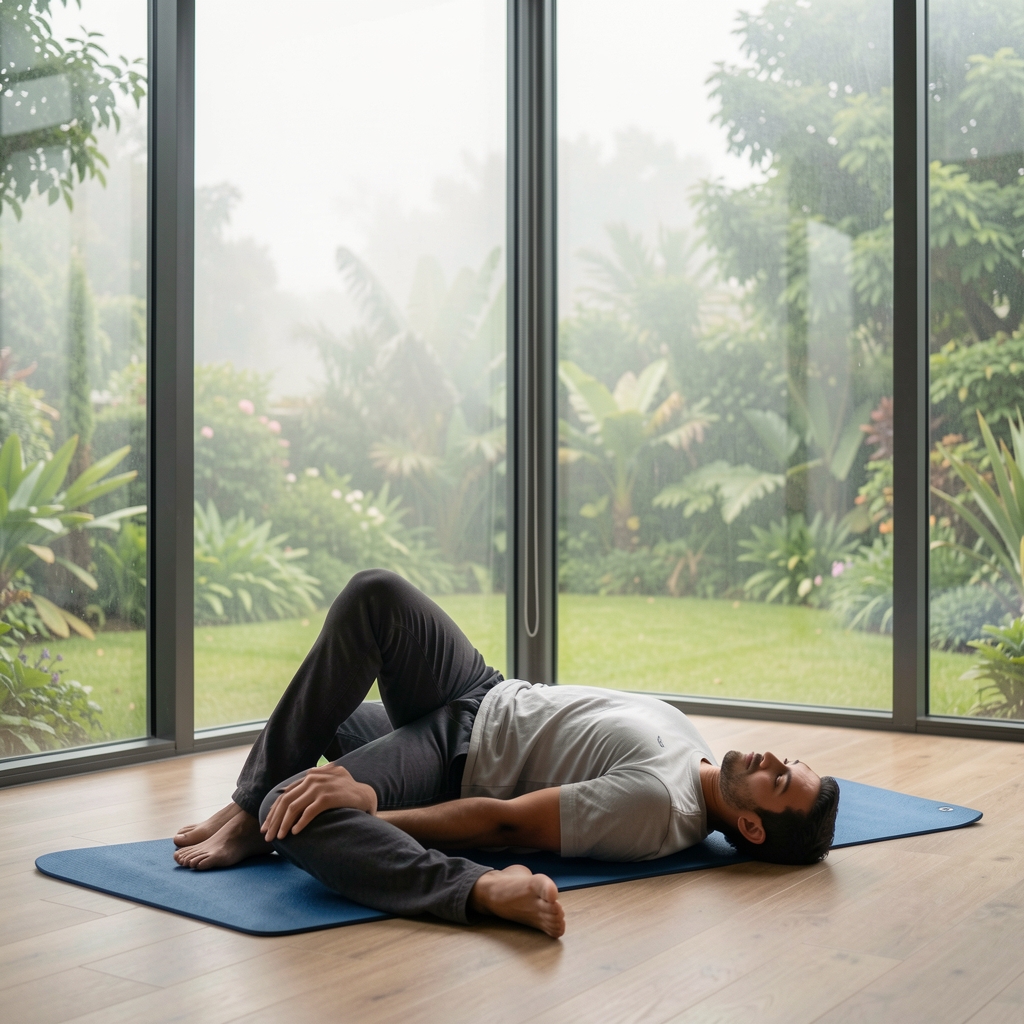
Among the variables that influence male wellness, lifestyle factors occupy a position of particular significance — not because they are more controllable than genetic predispositions or environmental exposures, but because they represent a consistent background against which other influences play out. Sleep, physical movement, stress regulation, and the quality of one's daily environment collectively form a kind of metabolic and physiological context that shapes how the body functions over time.
This article explores these dimensions with the aim of providing a clear and contextualised understanding of what the research landscape shows — and, importantly, where its limits lie.
- Sleep Architecture and Restorative Cycles
- Physical Movement Across Different Modalities
- Stress as a Physiological Variable
- Social and Relational Dimensions
- The Interconnection of Lifestyle Elements
Sleep: More Than Rest
Sleep is often characterised simply as a period of inactivity and recovery. This characterisation is accurate in broad terms but substantially undersells the biological complexity of what occurs during sleep cycles. Research across sleep medicine and chronobiology has established that sleep functions as an active physiological state during which critical maintenance and regulatory processes take place — including memory consolidation, hormonal regulation, immune activity, and cellular repair.
For male physiology specifically, several hormonal and metabolic processes exhibit strong circadian dependency. Research has shown associations between consistent short sleep duration and alterations in metabolic markers including insulin sensitivity and appetite-regulating hormones. Additionally, the primary secretion patterns of several hormones relevant to male physiology are closely tied to sleep architecture, with the deepest slow-wave sleep stages playing a particularly significant role.
Quality of sleep — encompassing not just duration but continuity, timing, and the proportion of restorative sleep stages — appears to be as relevant as total sleep hours. Disrupted sleep architecture, such as that associated with inconsistent sleep timing or fragmented sleep due to environmental noise or light exposure, may affect these processes independently of total sleep duration.
Circadian rhythms — the approximately 24-hour biological cycles that govern the timing of physiological processes — are sensitive to light exposure, particularly to the spectrum of evening and morning light. Growing evidence links consistent light exposure patterns, including access to natural daylight and reduced artificial light exposure in the evening, to more regular circadian entrainment and associated sleep quality.
Physical Movement: Variety, Volume, and Context
The relationship between physical activity and male wellness is among the most extensively studied in exercise science and epidemiology. Consistent associations have been reported between regular physical movement and a wide range of well-being markers, including cardiovascular function, metabolic health, psychological well-being, and musculoskeletal integrity.
What the research also makes clear, however, is that the specific form of physical activity matters — and that the relationship is not uniformly dose-dependent. Different modalities of movement engage different physiological systems. Aerobic activity tends to influence cardiovascular and metabolic markers, while resistance-based activity has stronger associations with muscle mass maintenance and bone density. Activities involving coordination and skill acquisition appear to have neurological dimensions that are distinct from either.
One pattern worth highlighting is the distinction between moderate habitual movement integrated into daily life — walking, standing, stair use, active commuting — and structured exercise sessions. Population studies have raised questions about whether periods of sedentary behaviour can partially offset the benefits of intense but brief exercise sessions. This area of research — sometimes called "sedentary science" — suggests that the distribution of movement across the day may carry independent relevance beyond total exercise volume.
The interaction between physical activity and nutrition is also well-documented. Activity patterns affect nutrient requirements, metabolic rate, and the timing sensitivity of nutrient intake. These interactions underscore the value of considering movement and diet as part of an integrated lifestyle context rather than separately optimised variables.
Stress as a Physiological Variable
Stress is a term that carries both popular and scientific meanings, and the distinction matters when evaluating its role in male wellness. In physiological terms, stress refers to the activation of the body's stress-response systems — primarily the hypothalamic-pituitary-adrenal (HPA) axis and the sympathetic nervous system — in response to perceived demands or threats.
Acute stress responses are adaptive and well-designed by evolutionary history. They mobilise energy, heighten alertness, and prepare the organism for action. The challenge that contemporary life poses is not acute stress itself but the persistence of stress activation over extended periods without adequate recovery — a condition often described as chronic stress.
Prolonged activation of stress-response systems has documented associations with disruptions to sleep architecture, nutritional behaviour, metabolic regulation, and immune function. In male physiology specifically, research has explored associations between chronic psychosocial stress and various hormonal markers, though the mechanistic pathways and individual variation in these relationships are complex and not fully characterised.
Approaches to stress regulation — including practices that promote parasympathetic nervous system activity, such as mindfulness, rhythmic breathing, time in nature, and social connection — have been studied for their effects on stress biomarkers. These approaches are associated in the literature with reductions in cortisol patterns and improvements in HPA axis regulation, though effect sizes vary significantly across studies and populations.
Social and Relational Dimensions of Wellness
The social dimensions of male wellness are less frequently discussed in mainstream health contexts but are supported by a substantial body of epidemiological evidence. Social isolation and loneliness have been associated in large-scale population studies with a range of adverse health outcomes — a relationship that appears to operate through multiple pathways including behavioural, psychological, and neuroendocrine mechanisms.
For men specifically, cultural norms around social connection and emotional expression have been identified as potential moderating factors. Research in this area suggests that the quality of social relationships — characterised by reciprocity, trust, and perceived support — may be a more significant predictor of well-being outcomes than the quantity of social contacts.
Community belonging, meaningful work, and a sense of purpose have also been studied as contributors to male wellness within the broader social determinants of health framework. These factors do not operate through discrete biological mechanisms but appear to influence the broader psychoneuroimmunological context in which other lifestyle variables function.
The Interconnection of Lifestyle Dimensions
Perhaps the most important insight to carry from this overview is that no single lifestyle dimension operates in isolation. Sleep affects physical performance and appetite regulation. Physical activity influences sleep quality and stress resilience. Chronic stress disrupts both sleep architecture and dietary behaviour. Social connection moderates stress responses and physical health outcomes.
These interconnections mean that lifestyle factors are better understood as a system than as a list of independent variables. This systems perspective has practical implications for how research in this area should be interpreted: studies that examine a single lifestyle factor in isolation — however rigorously conducted — provide only partial information about its contribution to well-being within a real-world context of competing influences.
This article presents general educational context about lifestyle factors and their relationship to male wellness, drawing on patterns identified in the broader research literature. It does not represent guidance for individual circumstances.
Author: Clara Jensen Published: 18 April 2026